In today’s workplace, technical expertise alone isn’t enough. Organizations now expect employees to communicate effectively, collaborate seamlessly, think creatively, and demonstrate emotional intelligence and the foundation of soft skills.
The challenge:
Soft skills can’t be mastered by reading slides or attending lectures. They develop through real-world applications, coaching, reflection, and continuous reinforcement. This makes traditional classroom-only training models outdated and ineffective.
To truly build human-centric capabilities, organizations need a modern learning approach that is dynamic, interactive, and integrated into everyday work.
Why Soft Skills Matter More Than Ever
Soft skills directly influence:
- Customer satisfaction and loyalty
- Team productivity and collaboration
- Leadership strength and decision-making
- Conflict resolution and workplace culture
- Adaptability in fast-changing environments
As automation and AI take over routine tasks, skills like empathy, creativity, negotiation, and critical thinking are becoming the ultimate competitive advantage.
What’s Wrong with Traditional Soft Skills Training?
Many organizations still rely on:
- One-day workshops
- Long lectures with minimal interaction
- Generic content not tailored to real challenges
- No reinforcement after the session ends
Result:
Employees forget up to 70% of what they learn within a week when there’s no ongoing support (The Forgetting Curve). Training feels like a one-time “event” not a lasting transformation.
The Modern Approach: How Soft Skills Should Be Trained Today
To deliver real impact; soft skills training must be:
1. Blended & Experience-Based
Combine eLearning for concepts with digital simulations, coaching, and role-plays for real-life practice. Learners apply skills during training not afterward.
2. Microlearning for Continuous Reinforcement
Short, focused modules (3–7 minutes) help learners practice one skill at a time — perfect for busy professionals.
3. Mobile-First for Anytime Access
Learning should be accessible on devices employees already use, making training seamless and workplace-ready.
4. Personalized Learning Journeys
Different roles require different soft skills. Tailored pathways ensure relevance and engagement.
5. Gamified Learning for Motivation
Badges, points, leaderboards, and interactive scenarios spark healthy competition and drive participation.
6. Social & Collaborative
Peer discussions, coaching circles, and group activities deepen empathy and refine communication.
7. Data-Driven & Measurable
Analytics, pre/post assessments, and behavioral scorecards show real progress — not just attendance numbers.
How Blended Learning Professionals Helps You Transform Soft Skills
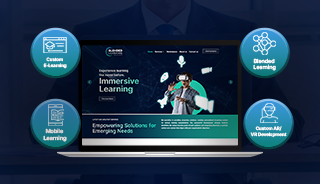
At Blended Learning Professionals (blendedlearning.sg), we design custom learning experiences that build real-world soft skills through:
1. Scenario-based learning
2. Digital simulations
3. Microlearning modules
4. Gamified challenges
5. Social learning experiences
6. Assessments + analytics tracking
We work closely with HR and L&D teams to ensure content aligns with organizational culture and performance goals, turning skills like communication, leadership, and negotiation into measurable results.